Snowflake Method Week 2

If you’ve been following my blog, you’ll know that last Saturday I used the first three steps of the Snowflake Method to begin plotting the Regency Romance novel I plan to write for NaNoWriMo. If you haven’t read that post yet, I recommend going back and checking it out here. This week I worked on steps four and five.

I found these steps harder than I expected.

I think that I’m just used to doing things in a certain way. And that certain way is usually a bullet point list that isn’t necessarily linear, at least not at first. And this isn’t how I typically develop my characters either, though I do see how useful it is to think of the point of view of every character for the duration of the story. I’m not sure yet, because I haven’t actually written it, but I think that this may result in characters that are better motivated overall. After all, I have to actually think about what each character is actually doing during the story. This may help me out with subplots as well, which if I’m being honest, has always been a weakness of mine. I am typically very sparse in my writing. Very straightforward. This may help me lend some complexity to my plot, which is awesome.

Still though, this is harder than expected. It feels closer to drafting to me than my outlines typically do. Yet, it’s not drafting. I don’t know. It’s caused some wires to get crossed in my brain.

Anyway, let’s talk about it.

Step 4: Expand your plot paragraph into a 1-page plot synopsis

As always, if you want more detail about what these steps are all about, I highly recommend going to Randy Ingermanson’s page here.

I think one of the problems I have is with the expansion of each sentence into its own paragraph. I guess there’s a part of me that wants a little more guidance. What exactly should each of these paragraphs contain? (Do you want him to write your book for you, too, Robin? Geez.) Anyway, I did the best I could.

I took this paragraph from last week:

An awkward, late-blooming debutante goes to London for her very first Season. When her mother informs her that this will be her only chance to marry before being banished to the country forever, she is determined to find herself a husband. The surly widower with whom she has formed a friendship and is falling in love with informs her that he never intends to marry again. Her attempts to secure a match with a handsome young rake leave her in a compromising position that could ruin her prospects forever. In the end, she and the man she loves live happily ever after.

And expanded each sentence into its own paragraph:

Having spent the entire 22 years of her life away from high society, a debutante named Jane is eager to spend her first Season in London. Though her mother regrets agreeing to go to London in the first place and complains about town nonstop, Jane is hungry for new experiences. As Jane moves into society, she is intimidated by all the social rules that everyone else seems to understand naturally, but she has never learned. She often makes a fool of herself by either talking too much or too little, and never about what she should. Though Jane was able to make a friend in Lady Arabella during the first half of the Season, she is abandoned when Arabella marries.

 Jane is left alone to fend for herself among the ton. Though she tries, she cannot seem to comport herself in the way Lady Arabella advised her to. When she makes a fool of herself at one of the Season’s largest ball’s, Jane becomes a pariah. Her mother declares that Jane is not fit for high society. She informs her that this will be her only chance to marry before they go back to their solitary life in the country forever.

With time running short, Jane becomes determined to find herself a husband. She attends every social gathering she is fortunate enough to warrant an invitation to. Her inability to socialize properly often makes her a target for mockery, but there is one upside: She gets to spend time with a surly widower, George Beaumont, whose manners are nearly as odd as hers. Her fledgling hopes are dashed when he informs her that he never intends to marry again.

Though she is disappointed, Jane knows that she must still find herself a husband. She catches the attention of a handsome young rake, Jack Campbell. An enemy tries to warn her about the man, but she doesn’t listen, too focused on reaching her goal by the end of the Season. She even ignores George’s warnings, resenting that he sees her as foolish and young and unable to take care of herself. Her attempts to secure Jack’s affections leave her in a compromising position that could ruin her prospects forever.

As the gossip in town becomes too much for Jane, she begins to think that returning to the country may not be so bad after all. Much to her surprise, Jack does take pity and offer his hand to her in marriage, though it is obvious to her that he resents the idea. She goes to Lady Arabella to ask for help in making the decision. Arabella tells her that marrying a man that she cannot be happy with is a terrible mistake. Jane decides to go to George and ask him to marry her. In the end, she and the man she loves live happily ever after.

It’s a pretty simple plot, but you can see how the Snowflake Method gradually adds complexity. There’s a lot more here than there was last week. Now I have a good overview of the plot, though many details need to be filled in.

Though this step felt difficult while I was doing it, looking back now that it’s done, I think this was a much faster way to get the full main plot figured out than what I usually do. Overall, I liked this step and would recommend it.

Moving on to…

Step 5: Write a 1-page description for each major character and a half page description for each minor character

I’m pretty sure that I’m going to be adding characters as I go. The fact that the plot is still pretty sparse means that I just don’t know how many characters I’m going to actually need. That’s okay. I think if I had to do this for every single character at once, I might get bored and want to stop. Part of this method is adding complexity as you go, so I will have to return to this step as I add more characters. Totally fine.

I decided to share the love interest’s description since, you basically get Jane’s side of the story from the above plot synopsis. And yes, I have decided to keep this as her story, though there is still a little part of me that isn’t quite sure that’s the right course. But, this is just the outline and I can change it anytime I want. So, for now, this is what I’m doing.

I started with this paragraph from last week:

A surly widower goes to London for the Season to escape the monotony of his life at home. When he meets an awkward debutante who is on the hunt for a husband, he befriends her against his better judgement. He suspects that she may be forming an attachment to him and that others are beginning to notice, so he informs her that he never intends to marry again. This causes her to look elsewhere for her marriage hopes, triggering both jealousy and concern when she finds a prospective suitor in a notorious rake. In the end, he changes his mind about marriage and they live happily ever after.

And turned it into this description:

It’s been three years since George Beaumont’s wife died and two since he’s gone to London for the Season. Though he doesn’t miss the false sympathy he received from the ton, he has grown bored with the quiet life. With some nudging by a friend, he travels to London once more. He finds that society is no less shallow than he’d previously decided. Sympathy for him turns to scorn when he can’t hold his tongue around the upper-crust of society.

George nearly decides to give up and return to the quiet life when he meets an awkward debutante, Jane Templeton, who is on the hunt for a husband. At first, he finds her ridiculous and tells her so. After watching her stumble her way through society, though, he begins to feel charmed by her awkwardness. If nothing else, he appreciates her straightforwardness in contrast with the rest of the ton. He befriends her against his better judgement.

The moments that he spends with Jane are the highlight of the Season for him. In spite of himself, he grows very fond of her. However, as time passes, he suspects that she may be forming an attachment to him and that others are beginning to notice. He had long ago decided that he would never again marry and he doesn’t plan to change his mind for her. He decides that the kindest course is to inform her that he is not an option for her husband-hunt.

Jane takes his declaration with dignity, and he finds himself strangely disappointed. He writes this off as foolishness and contents himself with enjoying her friendship. Jane, however, begins to look elsewhere for her marriage hopes. George is alarmed and jealous when Jane begins spending time with a notorious rake, Jack Campbell. He tries to warn Jane that Jack is not a good man, but Jane doesn’t listen to him.

George is forced to reexamine his own feelings for Jane as she grows closer to Jack. When Jane is put in a compromised position, George is desperate to figure out a way to save her. He is forced to realize that he loves Jane and indeed wants to marry her. He decides that he will propose to her, but in the end, it is she who breaks tradition and proposes to him. Though most men would not stand for a woman proposing to them, George is delighted to say yes.

This is basically the same as Step 4, only from the POV of a different character. This step definitely helps to clarify the motivations of characters other than the protagonist. It can be easy to just focus on the protagonist, and true you want the main character to be the most compelling, but the other characters should be well-rounded and motivated also.

I think that this is an effective step, but I don’t know that I would continue it in the future, at least not for every character. It’s a lot of work, and can feel a little repetitive. I think there are other ways to get the same result. Still, I think it’s worth giving a shot at least once, especially if you struggle with character motivations.

That’s it for Week 2! I hope you enjoyed this and that you come back again next week! Now I only have to do one step per week in order to finish before NaNoWriMo, which is a relief. The steps are getting more involved and I’m going to need more time to work on them.

Next week is Step 6. For reference check out the Snowflake Method site, but in short, I’m going to be expanding the above 1-page plot synopsis into a 4-page plot synopsis. I probably won’t be sharing the full 4 pages as that’s an awful lot for a blog, but I’m thinking of sharing one page as well as my thoughts on the step as a whole. Wish me luck!

If you’re enjoying this blog, please like, follow, and share! It would really help me out.

If you’re also giving the Snowflake Method a shot, tell me in the comments what you think of it so far.

-Robin

Preptober

Preptober has officially begun! Woo!

What is Preptober? It’s the month of October where NaNoWriMo hopefuls spend their time prepping for NaNo. Oh, I suppose I should mention that NaNoWriMo is short for National Novel Writing Month, which happens every November. People across the world try to write the first draft of a 50k word novel. Some people like NaNo; Some hate it. I adore it.

I tried for probably about 3-4 years before I actually managed to hit the 50k words in a month goal. In retrospect, that makes my current goal of 84k words a month—for 12 straight months—seem a little wild.

Was I less motivated back then? Maybe.

Slower at writing? Probably.

 Busier? Hello, social distancing!

But one of the biggest changes from the time when I couldn’t win NaNoWriMo to now trying to do Milwordy is…

I won NaNoWriMo.

Seems like circular logic, I know, but bear with me here. I think learning that I could write that much in a month, made it more likely that I would write that much in a month. After all, if I’d done it once, I could do it again. Bye bye mental block!

I have crossed the finish line on most of the NaNos I’ve attempted since then, and most of the failures involved either life getting in the way, or a lack of proper preparation.

Which brings me right back around to Preptober. This is an important time for NaNo participants to get their ducks in a row for November. Time to get those outlines written, those characters molded, and your schedule cleared. November will be here before you know it!

If you’ve been following my blog, you’ll already know that I’m currently doing Structure Saturdays where I take you through my outlining process on my 2020 NaNoWriMo project. I hope that this can help anyone else currently prepping for NaNo, if not by giving help with the outlining process, then at least providing you with some company. To me, one of the greatest things about NaNoWriMo is the community. Novel writing can be a lonely process most of the time, but NaNo gives us all such a great opportunity to interact as we stumble our way down this literary path together.

Are you participating in NaNoWriMo this year? What, if anything, are you doing to prepare?

If you’re enjoying the blog, please like, follow and share! I post 2 to three times a week.

-Robin

Milwordy: Month 1 Wrap-Up

Stats

Average Daily Wordcount (Week 4): 3,366

Week 4 Total Wordcount: 23,564

Average Daily Wordcount (Month 1): 3,336

Month 1 Total Wordcount: 100,070

Words to go:

Month: — (I’m over my goal by 16,736)

Year: 899,930

I made it to 100k!

Can you believe it’s been a month already? In that time, I’ve written 3 novellas, published 14 blog posts including this one, and begun prepping for my NaNoWriMo novel. It feels like just yesterday that I was stumbling my way through WordPress to trying and get this blog up before Milwordy started. What do they say? Time flies when you’re having fun!

And it has been fun, but as I mentioned in a previous post, I’m starting to feel fatigue set in. I am spending a lot of my time doing this for, well, not a ton of reward.

Yes, I am getting a lot of words on the page, which is awesome. However, I know that a lot of those words aren’t my best. This both is and isn’t the fault of Milwordy. I don’t think it’s so much a function of writing fast as it is writing without enough preparation beforehand, which honestly is what happens when you decide to jump into a challenge like this with less than a month of warning. You don’t decide to run a marathon the night before the race.

If I had all of my outlines sorted out, I know that things would be going much better. That’s what I’m going to try and remedy going forward, but honestly it’s very hard to outline when I know I need those words. Fussing over an outline isn’t generally going to get me to that word count.

So that’s the downside.

On the upside, while it hasn’t all been sunshine and puppy-dogs, much of it has been a ton of fun. It’s easy to forget how much I do actually love writing when I’m in a writing slump. My slumps are usually caused by putting too much pressure on myself to write something great. But when the focus is on the word count, I can just relax and let myself suck if I need to.

And it’s funny, I don’t always suck when I do this. In fact, when I look back at the things that I’ve written under the pressure of challenges like NaNoWriMo or Milwordy, I often find I like them better than the things I have tried to write slowly. I think that when I allow myself the freedom to fail, that is when I am most creative. Plus, when I’m having fun, I really do think my work gets better.

Moreover, I’ve been pushing myself to do things that scare me. Things like, writing this blog and talking to people on social media and discord. I can sometimes collapse in on myself and not talk to anyone about the things that I’m most passionate about, so this has been an excellent way to get myself to open up and share what I’m spending so much of my time on.

I’m also enjoying the feeling of accomplishment that comes with reaching my word count daily. I haven’t felt that in a while.

I also think that all this writing is helping me to clear my mind, which is good because honestly, it’s a mess up there most of the time.

The question I want to ask myself at the end of each month is, is this challenge worth it? I’m not sure that my answer will stay the same for the whole year, and I’m not sure what I will do if the answer is ever negative, but for now at least, my answer is yes, it’s definitely worth it. I’m glad I started this challenge. I am happy to be continuing on.

All right October, I’m ready. Let’s do this!

If you’re participating in Milwordy, how has the challenge been going for you? Are you happy you took up the gauntlet?

If you’re not participating, what are your thoughts on this crazy challenge? Do you think that you would enjoy it? Do you think it’s a waste of time? Right now, are you saying, “Glad it’s her and not me?”

I’d love to hear from you!

Like, follow, and share if you’re enjoying this blog. I post 2 to 3 times each week.

-Robin

Structure Saturday: Snowflake Method Week 1

Here we are! The very first week of Structure Saturdays! If you read my post last Saturday, you will know that I promised to try out the first 3 steps of Randy Ingermanson’s Snowflake Method. And so, I did. I’m excited and nervous to share my progress with you.

For reference, I am currently planning a sequel to a Regency Romance I wrote a couple years ago. Is the first book published? No. Have I even revised the first book yet? No. Is it a good idea to work on a sequel when you haven’t even revised the first book, yet? Generally, no. But this is Milwordy! And NaNoWriMo! I need those words! Plus, this is only a sequel in the loosest sense of the word. It takes a side character from one book and gives them their own story. Same world, slight overlap, but totally different plot. So, it doesn’t really matter that the first story isn’t polished yet. This book could be its own thing completely separate from the first and literally no one would notice.

And just a quick primer here, if you’re unfamiliar with Regency Romance, its historical romance set in the Regency era in England in the early 1800s. Think Jane Austen.

Anyway, let’s get to outlining!

Step 1: Write a 1 sentence description (15 words or less)

As I told you last week, I’ve tried a little bit of this method before and when I first read the 15 words or less requirement, I was dubious to say the least. What was the point of that? If I need 20 words, then I need 20 words. But wow, was I wrong.

I’m not saying that a longer sentence is never warranted, but having this limit really forced me to challenge myself. It showed me how to be more succinct. It showed me how powerful it can be to simply rearrange words in a sentence. And it taught me that the first arrangement of words that comes flying out from my fingers is not usually the best. If I get nothing else from the Snowflake Method, I think this lesson is worth it.

So, here’s what I’ve got:

An unlikely romance forms between an awkward debutante and a surly widower.

You don’t even want to know how many times I shuffled those words (or other similar words) around just to get those 12.

44 times! It was 44 times!

Did you know that you could say the very same, very simple thing 44 different ways and never use another language besides English? Now you do!

Why did it take so long to hit this sentence?

Well, first I played around with descriptions for my protagonist. I tried shy, young woman and timid girl, but they made her seem way too young—she’s actually quite late in her coming out due to family stuff, blah, blah blah. Then I also tried out husband-hunter and husband-seeker, but those made her seem too mercenary. I landed on awkward debutante because it gets across her place in society and her personality in just two words.

I also toyed around with what to call the love interest. Grumpy widower sounded too old. I actually had the problem of making him sound too old A LOT. Grumpy, grouchy, crotchety—not good descriptors in this case. And moody made him seem like the kind of guy who likes to run around slamming doors and dramatically flinging his coattails, when really, he’s just a bit sarcastic and pessimistic. I also tried out calling him a married man because I was thinking of having it be a secret that his wife is dead. I may still do that, but…I don’t know…saying that there’s a romance forming between a debutante and a married man seems like false advertising. It’s too salacious for what I’m actually going to be writing here. Surly widower gets across some of his personality and baggage. I also think it is a nice contrast to “awkward debutante.”

And, of course, I swapped around the actions. Do they fall in love? (Yes, but do I want to give that away in this sentence?) Do they form an unlikely friendship? Also, yes, but I kept getting the image of a very young woman sitting around with an ancient widower talking about cards and who she should marry (certainly not him), so big nope on that.

Anyway, you can see why this step took me over an hour. I probably could have done one blog post just on this. I’m on the fence about how much this really helps develop the story because it’s a lot of time spent for a single sentence. On the other hand, it does provide me with a lot of clarity on what my story is actually about. I don’t regret this step, I’m just not sure how helpful it is in terms of outlining.

Okay, so for better or worse, that’s the sentence I’m going with. It may not be perfect, and it may even change once I’ve worked on the plot a little more, but for now that’s it. This can be the sentence I use when someone says, “Hey, what’s your book about?” Instead of stumbling over the words “Regency” and “Romance” twenty times until they back slowly away, I can just recite this. Yay!

Let’s keep this productivity train chugging along.

Step 2: Expand the sentence into a paragraph

Going by the description on the Snowflake Method website, this should be a 5-sentence paragraph:

  1. Introduction
  2. 1st Disaster
  3. 2nd Disaster
  4. 3rd Disaster
  5. Conclusion

The disasters match up to the 3-act structure (should we have started with a basic 3-act structure? Too late now!) like so:

  1. End of Act 1
  2. Midpoint
  3. End of Act 2

I like Randy Ingermanson’s suggestion that the last 2 disasters (at least) should be caused by the protagonist. Excellent advice to keep the protagonist from being passive.

Here’s what I ended up with:

An awkward, late-blooming debutante goes to London for her very first Season. When her mother informs her that this will be her only chance to marry before being banished to the country forever, she is determined to find herself a husband. The surly widower with whom she has formed a friendship and is falling in love with informs her that he never intends to marry again. Her attempts to secure a match with a handsome young rake leave her in a compromising position that could ruin her prospects forever. In the end, she and the man she loves live happily ever after.

I didn’t spend nearly as much time on the sentence structure this time because really this is all likely to change as I go. But this is the broad overview of what the novel will be about. We’ll expand on this next week, but this works for the present.

Step 3: Write a one-page summary for each major character

If you looked at the Snowflake Method website, you’ll know that the summary should include the following: Name, One Sentence Storyline, Motivation, Goal, Conflict, Epiphany, and One paragraph summary.

This is not generally how I like to build characters. I like to write vignettes about my characters’ backstories until they start to feel real. Then I can fill out a cheat sheet about them. Going at character charts before I’ve really figured out who the characters are has always left me (and my characters) a little cold. If it works for you, that’s awesome! But it’s not typically what I do.

I did say I was going to give the Snowflake Method a full try, though, so that’s what I did! If I need to work on the characters more later, I will.

Obviously, I’m not going to show you what I did for every character. That would be…a lot. But I think you can get the idea off of my protagonist’s chart.

Name: Jane Templeton

One sentence summary of character’s storyline: While seeking a husband in London, an awkward debutante falls in love with a surly widower.

Motivation (what does she want abstractly): To fit in. Also, to experience new things because she has been sheltered her whole life.

Goal (what does she want concretely?): To find a husband so that her mother won’t force her back to the same old country life she’s always known.

Conflict (what prevents her from reaching her goal?): She is socially awkward and so attracting a suitor is difficult. Also, she is slowly falling in love with a man that declares he will never marry again.

Epiphany (what will she learn? How will she change?): She will learn…

Ack! This is where I figured out that I hadn’t so much planned Jane’s change as I had planned her love interest’s change. But if he’s the one doing all the learning and growing, shouldn’t it be his story? And suddenly I have a dilemma on my hands. I haven’t figured this out yet, but that’s what outlining is for, after all. Either I need to create a good arc for her or I need to switch to him as my protagonist. Really, I like all my main characters to have some kind of arc, so I need to work on her regardless, but I need to figure out if whatever arc I give her is protagonist worthy. I’m hoping to figure this out over the next week as I continue the outline, but for now I’m going to have to leave this one blank.

One paragraph summary of character’s storyline:

Since—for the moment at least—this is Jane’s story, the summary paragraph for her character is exactly the same as the one for the story as a whole so I’m not going to repeat it here. For the other characters it’s a little different, but still follow a similar trajectory. As an example, here’ is my paragraph for the love interest:

A surly widower goes to London for the Season to escape the monotony of his life at home. When he meets an awkward debutante who is on the hunt for a husband, he befriends her against his better judgement. He suspects that she may be forming an attachment to him and that others are beginning to notice, so he informs her that he never intends to marry again. This causes her to look elsewhere for her marriage hopes, triggering both jealousy and concern when she finds a prospective suitor in a notorious rake. In the end, he changes his mind about marriage and they live happily ever after.

Since step 10 is actually writing the first draft, I only have 6 steps left to get through, but I only have 5 weeks before NaNoWriMo. That means I have to double up one more time. That’s what I’m trying to do in this next week, but the steps are getting more involved so we’ll see how it goes. If you want to get a full description of steps 4 and 5, go here. If you want a quick overview:

Step 4: Expand each sentence from your summary paragraph into its own paragraph. It should add up to a roughly 1-page synopsis of your novel.

Step 5: Write a 1-page description of each major character and a half-page description of each minor character.

So, there it is! The first 3 steps of the Snowflake Method Completed! Were you outlining along with me? Feel free to share your sentences in the comments, I’d love to read them or tell me what you think of the Snowflake Method so far. Are you too much of a pantser for all this outlining? Or do you have another outlining method you prefer? I’m always looking for new ways to improve my writing processes, so don’t be shy if you’ve got suggestions!

Let me know if you liked this or if you found it boring. Though I enjoy seeing this kind of thing from other writers, I’m not sure if this is interesting for other people. I don’t want to waste a lot of time on this if I’m boring people to tears lol.

That’s all for now! I’ll talk to you again next week!

-Robin

Fatigue

Okay, fourth week, and I admit it…I’m beginning to feel a little fatigue setting in.

If this were NaNoWriMo, it would be relatively easy to push through. I mean, if you make it to the fourth week in NaNo, you’re ¾ of the way done. It would feel like a waste to stop there and you have the benefit of knowing that you’re very close to done. Soon you can rest. Soon it will be Christmas!

Not so with Milwordy.

A year is a long time to do a challenge like this. I am not even a twelfth of the way through and already I’m tired? Not a good sign.

The thing is, this is actually a good challenge for testing how serious I am about writing, or rather how serious I am about wanting to be a full-time author. That is what I want and though I may never actually be able to achieve that dream, it is what I’m striving for. What’s great about Milwordy is that it gives me a peek into what that would actually be like. What would it be like to have to write, rather than to do it because I want to?

Yes, I’m doing Milwordy because I want to. No one’s forcing me. I’m not earning a paycheck here. But because I’ve announced it to the world, I do feel some obligation to keep going with it. And now I know what it would be like to write every day—to write a lot every day—without an end lurking around the corner of the next month. Is this something that I really want to spend my life doing?

Yes.

Or rather, sort of.

The thing is, if I were a full-time writer, I wouldn’t be trying to do this AND go to a full-time job as well. Writing would be the full-time job. It’s hard to wake up early, write, go to work all day, come home, write, go to bed. Repeat. And do that every day. It’s not impossible, but if I had to do this every day, not just for the next year, but for the rest of my life, could I do it? Probably not.

But one thing that I am figuring out during this process is what would be a totally doable amount of writing to expect from myself while also holding down a full-time day job. A 1k minimum would be pretty easy for me to adhere to. Even 2k—especially if I was giving myself breaks for outlining and revision—would also be pretty doable.

I think that I can make it to the year mark doing 3-4k daily, but I’m not going to lie, if there wasn’t a finish line waiting for me, I’d probably have given it up already. If you’re a writer who is regularly writing a ton of words on top of holding down a full-time job, or taking care of your kids or aging parents or all of the above and more besides, I don’t know how you do it, but you’re amazing. Keep up the good work! But also, make sure you give yourself a break once in a while. You deserve it!

If you’re doing Milwordy, how has it been treating you? Do you find it easy to hit your word target or are you struggling? Do you think you could keep this up forever or do you think having that finish line ahead of you helps keep you focused? Do you have a lot of other obligations in your life, or are you able to devote yourself entirely to your writing?

Feel free to like, share, and follow this blog if you’re enjoying it. Follow me on Twitter and Instagram for more updates on my Milwordy progress. And don’t be shy about comments! I’d love to hear from you!

-Robin

Milwordy: Week 3 Thoughts

Stats:

Average Daily Wordcount: 3,304

Week Total Wordcount: 23,130

Words to go:

Month: 16,000

Year: 932,666

Another week bites the dust!

I was sick this week which means that I both had more time to write because I was off work, and less time to write because of all the sleeping. As you can see by my stats, I basically stayed on par with the previous two weeks. I can’t be mad at that, but there’s always a little part of me that’s like…you had all that time! Why were you sleeping?

Dumb, I know. When you need rest, you need rest. That’s something I forget sometimes and I’m definitely going to have to keep reminding myself of it as this challenge continues on.

What I learned this week is that outlines help. They really, really do. I wrote my second novella for this challenge with even less of an outline than I had for the first and let me tell you, it’s a mess. There’s a good chance that this will be a complete rewrite when I get around to revising it. At the very least I’m going to have some major work to do on the theme because it took me literally over 20k of a 27k novella to figure out what my main character was supposed to be learning from his experience. The latter half, um, wanders.

Anyway, another interesting thing I learned about outlines is that I don’t actually need one in order to finish a draft. I have tried various forms of outlining (including not outlining) before and have always come to the conclusion that I need at least a little bit of an outline in order to actually finish a story.

Not so.

Granted, like I said, it’s a pretty big mess and possibly a total rewrite, but then many of my extensively outlined stories have turned out the same way. So, I guess I’m still a little torn on the plotter vs. pantser front.

If you read my post on Saturday, you already know that I’m going to be doing Structure Saturdays, where I try out different outlining methods so I can see what works for me. From now until NaNoWriMo, I’m going to be trying out The Snowflake Method, so if you’re interested please join me on Saturdays to talk about my progress (and yours if you decide to outline along with me!).

Other than that, I think I’ve learned that posture really can help with typing pain and that YouTube is a procrastination machine. But then I kind of already knew those things, I just didn’t want to admit it.

Have you learned anything new this week? Are you a plotter or a pantser or something in between?

Feel free to like, share, and follow this blog if you’re enjoying it. Follow me on Twitter and Instagram for more updates on my Milwordy progress. And don’t be shy about comments! I’d love to hear from you!

-Robin

Structure Saturdays

I’ve been thinking a lot about what exactly to write on this blog. I kind of just…hopped into blogging as a way to document the whole Milwordy experiment and didn’t have much of a plan for what I’d actually say. The updates and what I’ve learned are obvious, though I worry that will get boring with time. After all, there’s probably only so much I can say before it gets repetitive and who really wants to keep reading me say, “I wrote a bunch of words this week!” and “Ouch! My wrists!”?

Maybe you do, I don’t know. If I was honest about how repetitive the content I like to consume can be, maybe I would worry less. Or maybe I would just realize how boring I am. I don’t know.

Anyway, I want to do something that I always enjoy seeing another writer do. I want to take you through my whole outlining process, start to finish.

The problem? I don’t have a single solid outlining process. I’ve tried a lot of different things for a lot of different books and I’ve never quite found THE ONE, you know? The golden process that I can set in stone and will make writing easy forever and ever and ever.

Yeah, okay so that probably doesn’t exist, but that doesn’t mean I can’t keep trying, does it?

Here’s what I’m proposing: Since I’m going to need to start outlining new stories for Milwordy (as I have realized the pile of story ideas I already have waiting for me to write are not actually going to get me all the way to August 31, 2021), I thought I would give a few different outlining methods a test drive and see what works best. I don’t know how this is going to pan out. This might be a terrible idea, but isn’t that what Milwordy all about? Challenging yourself with potentially terrible ideas?

So, I had to pick an outlining method to start with. There are A LOT to choose from. But, after much careful deliberation, I decided to go with The Snowflake Method! If you don’t know, this method posits that you can build a novel by starting with a small idea and then, step-by-step building it into a full outline.

This is one that I’ve tried before, though I haven’t ever done the whole thing, in fact I’m not sure I even got halfway. It’s a lengthy process and definitely not for pantsers, which honestly I have yet to actually work out whether I’m a true plotter or pantser. That’s a subject for a whole other blog. I’m excited to try The Snowflake Method again, though. I want to give it my best shot this time and see what my results are. Plus, it’s a method that will actually give me a lot of words just in the outline because it actually requires (eventually) writing out pages worth of descriptions about the book. In fact, the founder of this method, Randy Ingermanson, says that it generally results in a 50-page outline for him (that’s like 12,500 words!). So even if the method doesn’t end up working, I’ll still be getting a lot of words, and I will finally know that this is an outlining method I can cross off my list forever.

But who knows? Maybe this will be THE ONE. I can only hope.

Though I would like to take a week for each of the 10 steps, there are only 6 weeks until NaNoWriMo, and I would like to have the outline done by then. So, in the next week I’m going to be doing the first three steps of the method. They are the easiest, and the first two at least should only take a couple of hours anyway, so I don’t mind piling on a little here in the beginning. On Saturdays (which I am dubbing Structure Saturdays from now on) I will come back with an update on my progress. If you’re interested in trying The Snowflake Method along with me (Preptober is almost here!) You can find the steps here. Essentially, the first three steps are as follows:

  1. Write a sentence that describes your novel (15 words or less).
  2. Expand the sentence into a paragraph that describes your novel.
  3. Create a brief character chart for your characters (at least for the major ones)

I strongly encourage you to go check out the website for further information about each of these steps, because there is more to it than what I’ve written here, but I wanted to give you the basic idea.

Let me know what you think of this outlining experiment and if you’ll be joining me in trying out The Snowflake Method.

Don’t be shy about liking and sharing the blog, and follow me here or on Instagram and Twitter if you want to keep track of my Milwordy progress.

-Robin

A Day in the Life of a Milwordy Participant

So…what does a day of trying to write a million words in a year actually look like? Obviously, your mileage may vary here. My days are different from other people’s. My workdays are different than my weekends. And really, each day is a little different from the last.

That said, I’m going to take you through one of my days, specifically I’m going to talk about a workday. Maybe I’ll do another one where I talk about what I do on the weekends, but let’s start here.

The absolute most important thing I’ve been doing during Milwordy is setting my alarm 2 hours earlier than normal. I’m not exactly what you’d call a morning person in the sense that I don’t enjoy getting up before the sun does. I don’t wake up feeling rested and refreshed. I don’t greet the day with gratitude and joy. There are no animated birds singing songs while looping around my bed because if they tried it once—let’s just say they wouldn’t get a chance to do it a second time. I’m a grouch in the morning, okay?

BUT!

I have, on a number of occasions, attempted to write everyday consistently. My success has varied, but what the attempts have taught me is that I’m most productive in the morning. I guess that means I’m a morning person who resents being a morning person. I’m betting there are at least a few of you that can relate.

If I wait until later in the day, not only do I typically write slower, but because I don’t have the time limit of having to get done before work, I tend to procrastinate more. And, getting my words in early lessens the chance that something unexpected will happen to throw off my day. For instance, the other day I came home from work with a borderline migraine, but thankfully I had gotten my words done in the morning, so I didn’t miss out on my writing for the day.

So, I get up between 5:30 and 6 AM. My cats freak out because this is the time they’ve always wanted to be fed, but me and my husband aren’t usually awake yet, so they have to soothe themselves by crying outside our bedroom door. Not anymore!

My cats are morning people. I wish I knew where they found the energy.

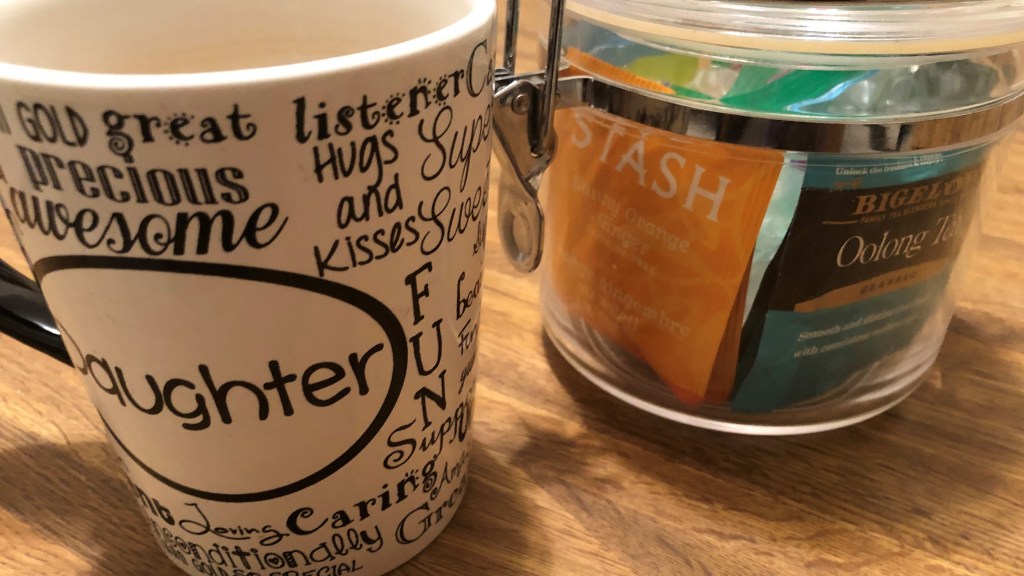
I like to make myself a cup of tea then. I have a little clear jar on the counter that I keep all my teas in so I can quickly make my pick and get a cup ready while the kettle heats. This particular morning, I’m going for the Candy Cane Lane by Celestial Seasonings that I buy a bunch of during Christmas so I can have it all year round. It’s the best. Seriously, if you like mint, give this a shot. The season for it is coming soon!

I plop the bag into the mug my dad gifted me 3 Christmases ago, trudge into the living room and drop down onto the broken recliner couch we’ve been meaning to replace for three years now. I’d like to tell you that I have this great writing space set up that I could take a picture of and post on Instagram and say, “Isn’t writing so wonderful!”

But no.

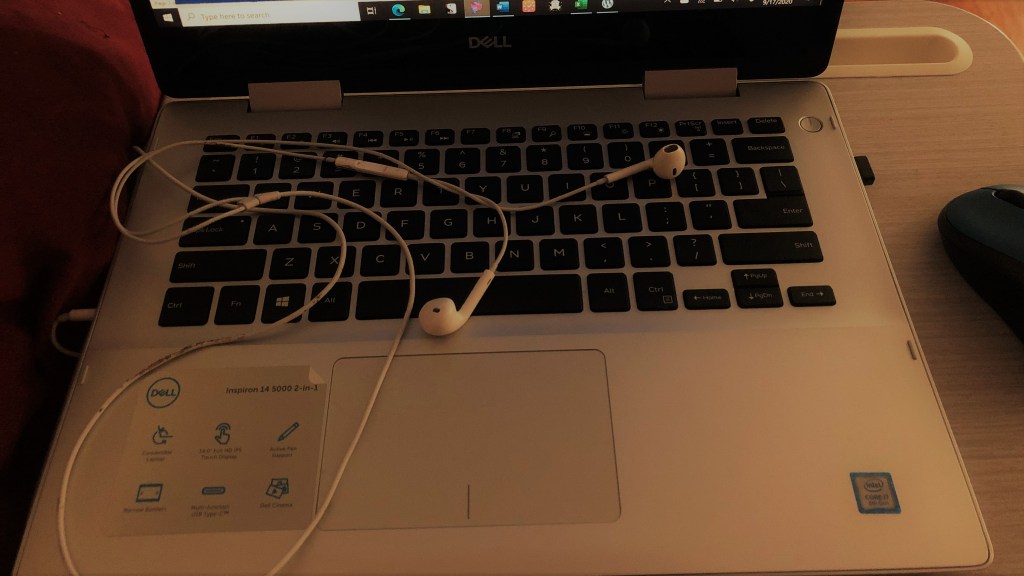
Writing is wonderful, but it also can be messy. At least for me. Even though I still have my childhood desk that I could easily clean off and use, and even though our three-seasons room is exactly the atmosphere I always imagined myself writing in, somehow I inevitably end up sitting on the couch, lap desk propped on my legs as I set up my computer. The table beside me is very much what most people find behind their tv stands: an octopus of chords and fallen papers.

This is why I don’t post pictures of my house on Instagram: Most of it looks like a mailbag exploded on every surface.

I boot up my laptop, open approximately 3,831,002 programs (Word, Write or Die, Pandora, and my internet browser, to name a few). And then finally I’m ready to write.

Often I like to find writing sprints on YouTube that I can follow along with, but this morning I decide to just jump into the writing. I want to get all my words in if I can, which requires focus. I take just a minute to read the last paragraph or so that I was working on yesterday to get myself back into the mindset of writing. I choose 30 minutes for my first sprint in Write or Die. I know I can get about 1,200 words in that time which is a really great start.

The sprint goes well. There are a lot of mistakes, of course, but I’ve got 1,261 words to add to the first draft of my second novella which feels great. I’ll revise those later.

I copy and paste the words to a blank Word document. Once I have all my words for the day, I’ll copy and paste the whole document into my actual novella file, but this way it’s easy to keep track of just the words I’ve done that day. No math required.

Okay, so here’s a weird little quirk of mine: I like even numbers. I take an even number of bites when I eat. When I’m walking, it’s two steps at a time—always. And when I’m writing, if the number of words ends up being an odd number, I have to go back and find a way of making it even.

I know, this is not the best way to write. Sometimes adding an extra word to make it even does not improve the story and so should not be done, but it’s compulsive. I can’t help it. So here we are. It would be easier if I didn’t have that little word counter in the corner keeping track for me, but that’s kind of necessary with Milwordy, isn’t it?

Now I take a little break. I stretch out my fingers. I’m starting to get some pain in my hands and wrists from all this writing. I’m sort of hoping that it’s just because I’m not used to doing this much typing and my muscles will get used to it, but I know I may have to figure out some way to mitigate the pain. Maybe I need better posture. Maybe if I actually sat at my desk and not the couch, my hands would be in better shape. I don’t know.

Anyway, now I do find myself a writing sprint on YouTube. It features several AuthorTubers I know and several I don’t, but I’m excited to start it.

They talk a lot. Which I like, but also this is a form of procrastination for me. I like to feel like I’m not entirely alone when I’m writing and this helps…but man, I know if I just wrote straight through without the distractions, I could get all of my words for the day in about an hour and fifteen minutes. Could you imagine? I can and have imagined it many times. *sigh*

That’s not what I’m doing today. Today I’m listening to people who have actually managed to have some success with writing, talk about writing, while I procrastinate. Good job, Robin.

There’s the first sprint. Only fifteen minutes, but hey, I can do a decent amount with that.

I get nearly 700 words, but I did go over the sprint time a bit. In fact, I just keep on typing as they talk and I get myself all the way to a 2,092 total for the day before I have to stop and get ready for work.

I should have gotten further than that. I had the time. I’ve done it before. But this is again the problem with watching YouTube word sprints. There’s a lot more rest time in between sprints than I would otherwise give myself.

But that’s okay. I still got over 2k words, which is a pretty great start to the day.

Next, I make my breakfast, eat, and change for work. I won’t walk you through my whole workday, but I will tell you this: My job is more physical than mental, and though I do work with other people, I often have time during the day where I can listen to music, or podcasts, or audiobooks. This is perfect for me as a writer. I’ve been listening to the Six Figure Authors podcast lately, which has been teaching me a lot about building a self-publishing career. I definitely recommend it. I’ve also just started the second book in the Scythe series. And when I listen to music, I often find myself brainstorming for my writing. Basically, even when I’m not writing and reading, I’m thinking about writing and reading.

I get home and my feet hurt; I collapse on the busted, old couch. It’s 5:30 and we’re having leftovers tonight so my husband and I don’t have to worry about heating up dinner until about 5 minutes to 7, which is when we like to sit down to watch Wheel of Fortune and Jeopardy.

Yes, my husband and I are in our mid-30s not our 70s. But we really like word games and trivia. Plus, when we were off work because of the pandemic shut-downs, it became a way to give ourselves a little bit of routine.

Anyway, my husband and I talk about our day for a little bit before I admit that I need to get more words done and he decides to play his video game—Smite, I think. I don’t know. I’m not a gamer.

Anyway, I set myself up much like I did in the morning. This time I don’t bother with YouTube. I just want to get my words done. If I get them done quickly enough, maybe I will reward myself with a video.

Though technically I only need 686 words to reach my minimum goal for the day, a feat which I could manage in about 15 minutes if I pushed myself, What I really want is to get to 3,831—the no weekends goal. That’s 1,739 words I would still need. But I have an hour. I’ve done more than that in an hour. Let’s do this!

Okay, so I finished up with 3,858 total, which means I made my stretch goal for the day! Barely.

I post a picture to Instagram. I’ve been doing little Instagram photo shoots during the weekend because I just don’t think I could keep up with this posting schedule if I had to take a picture every day. I try to take enough pictures that I have many things to choose from and can pick something that accurately reflects what I’m thinking in the moment. I don’t want to be inauthentic, but it would also stress me out to have to come up with a picture every day. This is something I’m still kind of working out since I’m still pretty new to Instagram.

Then my husband and I heat up our leftover chili, watch our shows, and then hem and haw about what to do for the rest of the night until we decide to watch Gordon Ramsay dress up as Mrs. Doubtfire, smell some spoiled chicken, and yell at restaurant owners until they fix their business. I never do get to watch that reward YouTube video I was talking about, but that’s alright. Getting to spend time with my husband is a pretty nice reward all on its own.

So that’s roughly what my weekdays look like now. Of course, things vary, but because of the whole pandemic thing, we haven’t really been going out to do things, so keeping a steady schedule hasn’t been too difficult.

Is any of this like your routine? How is your routine different? Have you found a routine yet, or are you still searching for one?

Let me know if you enjoyed this post. If people like it, maybe I will do another one detailing what a Milwordy weekend looks like.

Milwordy: Week 2 Thoughts

Stats:

Average Daily Wordcount: 3,240

Week Total Wordcount: 22,682

Words to go:

Month: 39,130

Year: 955,796

In week 2, I finished a romance novella. That means I have officially finished 1 project (or at least a 1st draft of a project) during Milwordy, which makes this challenge feel like a success already. I haven’t been able to finish a single thing since 2018—not a novel, not a novella, not a short story. I haven’t even come close. This is major for me.

Of course, the novella is going to need a lot of work still to bring it up to a standard where I might actually allow someone else’s eyes on it, so it’s not really “finished” per se. However, beyond not having finished a draft in a long time, this particular novella was something I had in my head in college.

I graduated college in 2009.

Eleven years and in all that time, this particular project has only been a glimmer in my eye. I had put it away for so long that I actually kind of forgot about it. I mean, it was always in the back of my mind, but in a kind of “Hey! Remember that one story? Yeah…I’m never touching that again” kind of way.

To put the plot down on paper, even if it needs a lot of revision, is a massive win.

So, I guess what I’ve learned in my second week of Milwordy is that I’m still capable of finishing things. Also, there are some ideas that need a long time to percolate; I’m glad I didn’t write this back in college. As a writer, I don’t think I was ready for it.

Another important thing I’ve learned, or perhaps relearned: When I have structure to my goals, and a solid time frame, I’m much better at getting my writing done. A big part of succeeding in this challenge so far has just been about the push to get those words in. That seems obvious, I guess, but I often wake up in the morning, not quite sure what I’m going to write and convinced that I won’t be able to write anything at all. Yet, because I have a goal to meet, somehow I always find the words anyway.

I’ve also learned that social media, can eat up a LOT of time. I’ve had personal social media accounts on various platforms before, but I’m well-known among my family and friends for never updating or even being present on those platforms. I’ve been trying more with this because I’m really hoping to join the online writing community. I don’t know many people in the real world who write, and no one who likes to write the types of things that I do. I think talking to people who understand both the joys and pains of writing will help keep me on track. Plus, getting to see what other writers have to say about genres I love, keeps my own passion burning.

But it is also a serious time-suck, and I’m still not as active as a lot of other people, especially on Twitter.

Anyway, what did you learn this week? Even if it’s not related to writing, I’d love to hear about it!

What I’m Working On

I thought it was time to tell you a little more about what I’m writing since that’s what I’ve been spending so much of my time working on lately.

Of course, I’ve been writing for this blog, but you can see that for yourself. The majority of my words have been going toward a series of romance novellas centered around past lives and fate. Basically, my characters have to fix the mistakes made by their past selves in order to move on to happier lives. And, of course, there’s some soulmate action going on.

Now, I’m not typically a romance writer. Don’t get me wrong, I’ve got nothing against romance. In fact, most of my writing has heavy romance subplots. I’ve just always seen myself as more of a fantasy writer. And there are elements of fantasy in this, too, it’s just that the romance takes center stage and that’s pretty new for me.

I had the idea for this series way back in college. I’m not sure what year the concept first burst its way into my brain, but I do remember working on the pre-writing in my college library while I should have been studying. Anyway, the last time I was in that library was before I graduated in 2009. So…it’s been a while.

Part of the reason it took me so long to finally write a draft of this, I think, was because I had moved away from the idea of writing romance. And the other part of it has to do with the fact that I had some really difficult times in college and. once I left, I didn’t want to think about anything related to that experience anymore.

But! Then I found my old notes at the end of 2018 and was like “Yep, time to revisit this.”

And then a terrible 2019 happened and I pushed it to the side again. I really thought that I was never going to write it, like it was the idea that got away. But here I am, eleven years later, grabbing onto that idea again. I’ve just finished a full 1st draft that’s waiting to be torn apart and put back together again. I kind of can’t believe it.

Full disclosure though, this was supposed to be a series of five novellas, so I’m actually only like 20% done (with the first drafts). I’m not worrying about that math right now though. Now’s a time for celebration!

I’m not sure if this will ever be something that I try to get published or self-publish or if I’ll just stuff it down in the bowels of my hard drive. I still don’t know that I’m a good enough writer to really make something of the stuff I’m writing now. Even if I got it polished up enough, there’s still the question of do I want to be a romance author? I’ve been focused on fantasy for so long. I mean, I know a lot of people publish in more than one genre, but sometimes when I give myself license to do whatever I want, I end up pulling myself in a thousand different directions. Like, if I do both fantasy and romance, am I going to be tempted to write in 20 other different genres because I let myself think multiple genres was okay?

I don’t know. This is all still a little early to be thinking about, but then, isn’t thinking ahead good? If you’re a writer (that wants to be published), do you try to think ahead toward when you’re ready to publish. Or do you focus on the writing itself and leave the rest for later?

If you’re a writer who’s already published, how far ahead did you plan your career? Are you still thinking ahead, or are you just taking it one day at a time?

I’d love to hear all your perspectives!